
What "Handcrafted in India" Actually Means
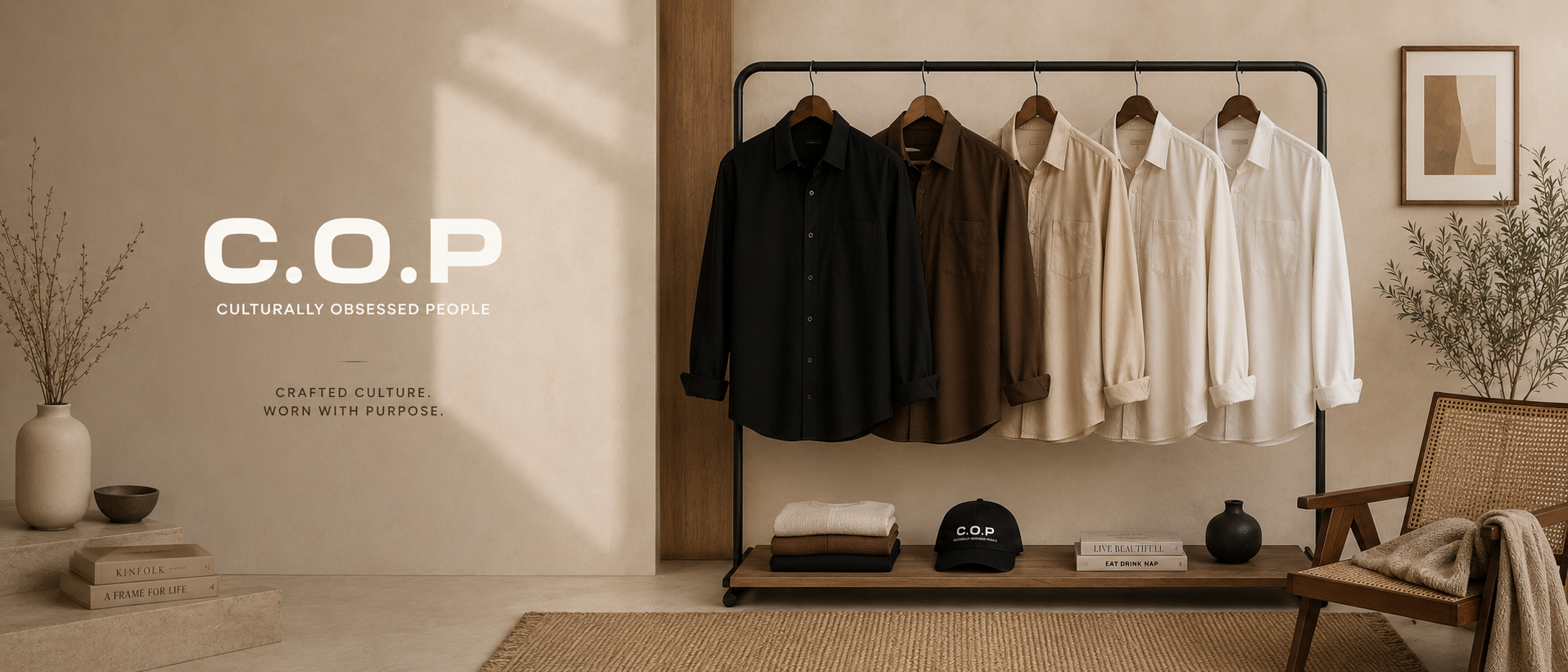
"Handcrafted" shows up on a lot of clothing tags these days. So does "artisanal," "small-batch," and "made with love." Most of the time, these words are doing marketing work, not describing an actual process. That's not necessarily dishonest — but it does mean the phrase has lost most of its meaning. Here's what it's supposed to mean, and what it actually looks like when a garment is genuinely handcrafted.
Where the Phrase Gets Diluted
A garment can technically pass through human hands at some point in its production and still be, in every meaningful sense, mass-manufactured — cut by machine, assembled on an automated line, with a human involved only briefly at final packaging. Calling that "handcrafted" isn't false in the narrowest sense. It's also not what most people picture when they read the word on a tag.
The dilution happens because "handcrafted" sells. It signals care, quality, and individual attention — all things people are willing to pay a little more for. Which is exactly why it's worth understanding what should actually back up the claim before taking it at face value.
What Genuine Handcrafting Involves
At COP, every garment is handcrafted in India — and that means specific, checkable steps, not just a label:
Human-guided cutting and construction: Rather than a fully automated cutting-and-assembly line, skilled tailors handle cutting and construction, making real time judgment calls on seam allowance, ease, and finish that a machine simply doesn't make.
Individual stitching decision:. Collar interfacing, cuff finishing, seam reinforcement at stress points — these are decisions made per garment by someone who's done this work repeatedly, not a single automated setting applied identically across a batch of thousands.
Hand quality checks before shipping: Every piece is checked by hand — stitching, buttons, seams, overall finish — before it ships. This is the step that catches the small defects a purely automated process would miss: a loose thread, a slightly misaligned button, a seam that needs reinforcing.
None of this means zero machinery is involved — cutting tools and sewing machines are part of any modern garment production. What makes it genuinely handcrafted is that human skill and judgment guide the process at every stage that actually affects quality, rather than a machine running unsupervised from start to finish.
Why This Distinction Matters for What You Buy
The difference between genuinely handcrafted and loosely-labelled "handcrafted" shows up in exactly the places you'd expect — durability, fit consistency, and finish quality:
Durability: Hand-checked seams and stitching are far less likely to unravel or fray early, because defects get caught before shipping rather than after a customer's first wash.
Fit consistency: Human-guided cutting and construction accounts for small variations that keep a "Tailored" fit actually tailored, rather than technically labelled that way.
Finish quality: The small details — collar structure, buttonhole finishing, seam neatness — are exactly where a rushed or fully automated process cuts corners, because none of these are visible in a product photo.
How to Spot Real Craftsmanship (Beyond the Label)
If you want to evaluate this for yourself, regardless of brand, a few practical checks help:
Look at the seams, not just the surface. Even, tightly-finished seams (not loose or fraying threads) are a strong indicator of hand-finishing quality.
Check the collar and cuffs. These are the first places that show construction quality — stiff, well-structured collars and cuffs suggest careful interfacing; floppy or uneven ones often don't.
Read return/complaint patterns, not just marketing copy. A brand that's confident in its process usually backs it with an easy returns policy — a signal that the physical product is expected to hold up to scrutiny.
Ask what "in India" is actually describing. Made in India, assembled in India, and handcrafted in India aren't interchangeable — the more specific and process-detailed a brand's claim, the more likely it's accurate.
Why COP Chooses This Process Anyway
None of the above is the fastest or cheapest way to produce clothing at scale. A fully automated process would be faster and less labour-intensive. We've chosen the slower route because the entire premise behind building clothing meant to last — timeless silhouettes, premium fabric, considered fit — falls apart if the actual construction cuts corners at the last, least visible step.
It's also, frankly, a bet on what shoppers increasingly seem to care about: not just how something looks in a photo, but how it holds up in real, repeated wear.
The Bottom Line
"Handcrafted in India" should mean something specific — human-guided construction, individual attention at each stage, and quality checks that happen before a garment ships, not after a complaint arrives. That's the standard we hold every COP piece to, and it's a reasonable standard to expect from any brand using the phrase, not just ours.
See the craftsmanship behind COP's collections — Shop the Full Range