
Tailored vs Classic vs Relaxed Fit: Which One Is Actually You?
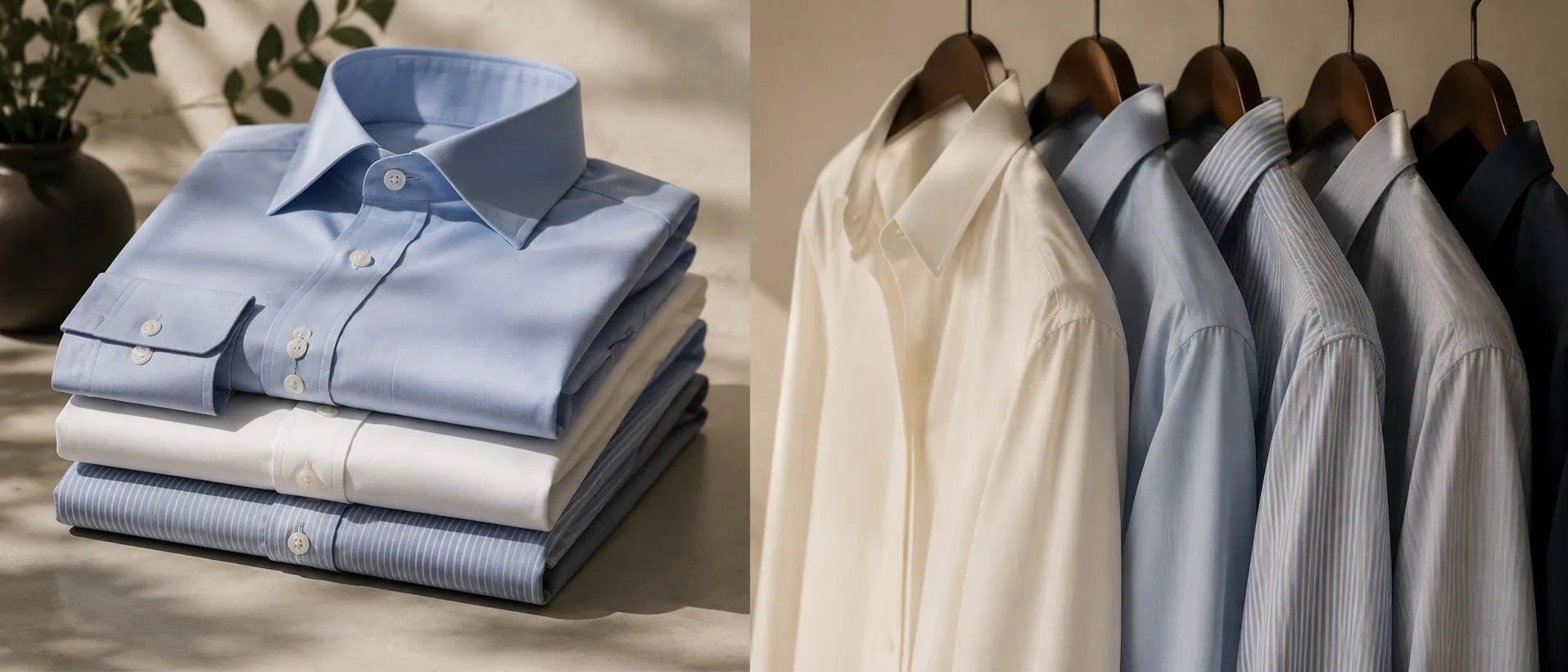
Most people pick a shirt fit the same way they picked their first one — by habit, not by actually knowing what "tailored," "classic," or "relaxed" means. That's fine until a shirt that looked right on the hanger feels wrong the moment you put it on: pulling at the shoulders, ballooning at the waist, or sitting somewhere in between that never quite settles. Fit categories exist to solve exactly this. Here's what each one actually means, and how to figure out which is actually you.
Why Fit Matters More Than Size
Two shirts in the same size — say, a Large — can fit completely differently depending on how they're cut. Size tells you the general dimensions. Fit tells you how those dimensions are distributed across the chest, waist, shoulders, and sleeves. This is why the same size across two fit categories, or two different brands, can feel like two different shirts entirely. Understanding fit, not just size, is the actual shortcut to shirts that feel right the moment you put them on — not after a few wears of getting used to it.
Tailored Fit: Built Close, Not Tight
A tailored fit is cut closer through the chest and waist, with a more defined shape through the torso. It's designed to follow the body's natural lines without restricting movement — the difference between "fitted" and "tight" is exactly the line a good tailored cut is meant to walk. This fit works best if you want a shirt that reads as put-together without any extra effort — the kind that looks intentional tucked in, under a blazer, or layered for a more formal setting. It's the fit most suited to office wear and occasions where a sharper silhouette matters.
Best for: Office wear, formal occasions, anyone who prefers a defined silhouette over extra room.
Classic Fit: The Middle Ground That Works for Almost Everyone
Classic fit sits between tailored and relaxed — closer to the body than relaxed, but with more room through the chest, waist, and arms than a tailored cut. It's designed to be comfortable across a full day without looking loose, which is exactly why it's the most commonly reached-for fit once someone actually finds the right one. If you're unsure where to start, classic fit is usually the safest first purchase from a brand you haven't worn before — it tells you the most about how a brand's general sizing runs before you commit to trying tailored or relaxed.
Best for: Everyday wear, first-time buyers of a brand, anyone who wants comfort without looking oversized.
Relaxed Fit: Room Without Losing Shape
Relaxed fit is cut with noticeably more room through the body and sleeves, designed for ease of movement and a more casual silhouette. Done well, this doesn't mean shapeless — a good relaxed fit still has structure at the shoulders and a clean drop through the body, rather than just being a larger version of a classic cut. This fit works best for weekend wear, layering over T-shirts, or anyone who prioritises comfort and movement over a fitted silhouette. It's also the most forgiving fit if your weight fluctuates or you simply prefer not to think about how a shirt sits when you sit down.
Best for: Weekend wear, layering, all-day comfort, casual settings.
How to Actually Figure Out Your Fit
Rather than guessing from a size chart alone, a few practical checks help narrow it down:
Check the shoulder seam. On a well-fitted shirt of any category, the shoulder seam should sit right at the edge of your shoulder — not drooping down your arm, not pulling toward your neck.
Sit down in it. A shirt that fits standing but pulls tight across the back or chest when seated is cut too close for how you actually plan to wear it.
Consider the occasion before the aesthetic. A tailored fit you never feel comfortable in at your desk isn't a better choice than a classic fit you'll actually wear five days a week.
Don't assume your size is fixed across fits. It's common to take a Classic-fit Medium and a Relaxed-fit Small in the same brand — the categories exist because sizing isn't linear across them.
Mixing Fits Within a Wardrobe
You don't need to commit to one fit category across your entire wardrobe. Many people wear tailored or classic shirts for work and relaxed fits for weekends — the categories are a tool for matching a shirt to its context, not a single identity to pick once and stick with forever.
The Bottom Line
Fit isn't about which category sounds the most premium or the most casual — it's about which one actually matches how and where you're going to wear the shirt. Try a size in each category once, pay attention to the shoulder seam and how it feels sitting down, and you'll know within a single wear which one is actually you.
Find your fit across COP's shirt collection — Shop Shirts by Fit.