
How to Care for Cotton Shirts So They Last Longer
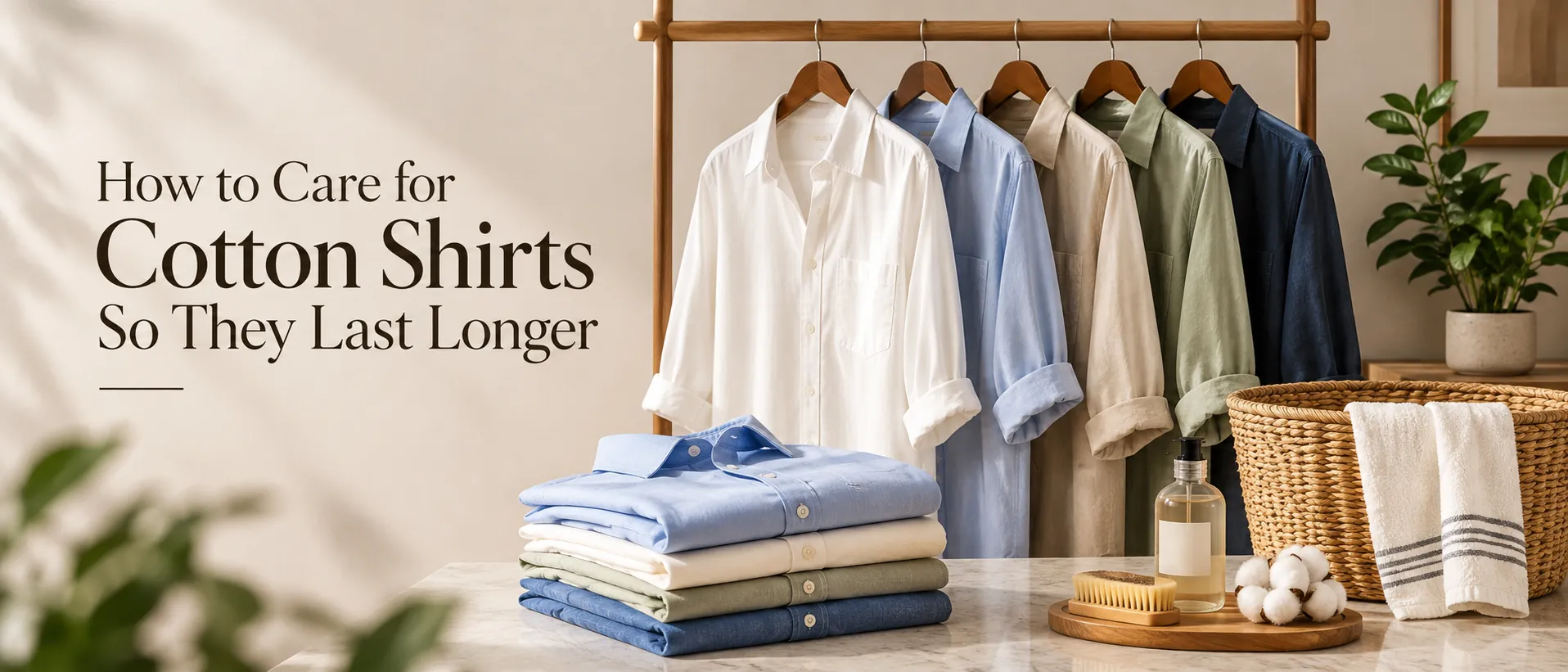
A well-made cotton shirt can last for years. Most don't — not because the fabric or stitching failed, but because of how they were washed, dried, and stored along the way. Care is the part of a shirt's lifespan that's entirely in your hands, and it's also the part most people give the least thought to. Here's what actually makes a difference.
Why Washing Is Where Most Shirts Get Damaged
More cotton shirts are worn out by washing machines than by actual wear. Hot water, harsh detergent, and high spin speeds all accelerate fibre breakdown, fading, and shrinkage — often within the first ten washes, long before the shirt has earned its keep. None of this means hand-washing everything forever. It means a few specific adjustments that take no extra time but significantly extend how long a shirt looks and fits the way it did on day one.
Washing: Cold Water, Gentle Cycle
Cold water is the single biggest lever for preserving both colour and fabric structure. Hot water opens up cotton fibres and accelerates dye loss and shrinkage — cold water keeps both in check without any real trade-off in cleaning power for normal, everyday wear.
• Wash in cold water on a gentle or normal cycle, not a heavy-duty setting.
• Turn shirts inside out before washing to reduce surface friction and protect the outer finish and any prints or embroidery.
• Wash similar colours together — even colourfast fabrics lose a small amount of dye each wash, and mixing dark and light items accelerates dulling on lighter pieces.
• Avoid overloading the machine. Shirts need room to move freely in the wash to avoid excess friction against zippers, buttons, and other garments.
Detergent: Less Is Usually More
Using more detergent than needed doesn't clean a shirt better — it usually just leaves residue that stiffens fabric and dulls colour over time. A moderate amount of a mild detergent, without added bleach or optical brighteners, is enough for regular wear. Save spot treatment for actual stains rather than using a stronger detergent across the whole wash.
Drying: Air Dry Whenever Possible
Tumble drying is convenient, and it's also one of the fastest ways to weaken cotton fibres, shrink a shirt out of its intended fit, and set wrinkles into the fabric permanently. Air drying takes longer but preserves both the fit and the finish far better.
• Hang shirts on a proper hanger while still slightly damp — this helps the fabric dry into its natural shape rather than a wrinkled one.
• Dry away from direct, harsh sunlight, which can fade colour over repeated exposure.
• If a dryer is unavoidable, use the lowest heat setting and remove the shirt while still slightly damp, then air dry the rest of the way.
Ironing and Storage
Iron on the appropriate cotton setting, ideally while the shirt is still slightly damp — this reduces the amount of heat and pressure needed to remove wrinkles, which in turn reduces wear on the fabric over time. Ironing inside out protects any prints, embroidery, or buttons from direct heat.
For storage, shirts you wear regularly are better off on hangers than folded in a drawer — folding creates permanent crease lines over time, especially at the collar and along the front placket. Reserve drawer storage for shirts you're not rotating through often.
Handling Stains Without Damaging the Fabric
The biggest mistake with stains is waiting. Fresh stains come out far more easily than set-in ones, and often with nothing more than cold water and a gentle dab — not a hard scrub, which can damage fibres and push the stain deeper into the weave.
• Treat stains as soon as possible, blotting rather than rubbing.
• Use cold water first; heat can set certain stains permanently before you've even had a chance to treat them.
• For anything stubborn, a targeted stain remover on just the affected area is safer than increasing detergent across the whole wash.
Why This Effort Is Worth It
None of this is complicated, and none of it takes significantly more time than a standard laundry routine. What it does is protect the actual investment already made in choosing a well-fabricated, well-constructed shirt in the first place — good fabric and good stitching can only do so much if care habits are working against them.
The Bottom Line
Cold water, gentle detergent, air drying, and prompt stain treatment — that's most of what separates a cotton shirt that looks new after a year from one that's faded and out of shape after three months. Small habits, applied consistently, are what actually make "built to last" true in practice.
Explore shirts designed to hold up to real, everyday wear — Shop Shirts.
Explore Our Collection